


You don't need much Mandarin for a good first week in Taiwan. You need the right thirty phrases, said clearly enough that people understand you, and the confidence to use them. This list is built around the moments you'll actually meet: walking into a guesthouse, pointing at food, finding the right train, paying, and asking for help when you're lost.
Every phrase has its characters (Taiwan uses traditional ones), zhuyin (Taiwan's own sound alphabet), pinyin, and, where we have it, Lin's voice. Tap to listen, then say it back out loud. That second step is the one that counts.
Greetings and getting help
- 不好意思bù hǎoyìsi · ㄅㄨˋ ㄏㄠˇ ㄧˋ ˙ㄙExcuse me, sorry to bother you
你好 opens any exchange. Said together, the two third tones change: the first one rises, so it comes out ní hǎo.
不好意思 is the most useful phrase people don't learn. Use it to get a shopkeeper's attention, to squeeze past someone on a crowded MRT, or when you're about to ask for something. It softens everything that follows.
When you're lost in a conversation, 我聽不懂 ("I don't understand what I heard"), 再說一次 and 慢一點 keep it going instead of ending it. Most people will happily slow down. 請問 ("may I ask") at the start of a question is polite and natural.
At the guesthouse
Small family guesthouses, called 民宿 (mínsù), are one of the nicest ways to see Taiwan, and often the hosts speak little English.
- 我有訂房wǒ yǒu dìngfáng · ㄨㄛˇ ㄧㄡˇ ㄉㄧㄥˋ ㄈㄤˊI have a booking
Floors in Taiwan count like in the US: 一樓 (yī lóu) is the ground floor, so 三樓 is two flights up. 可以拍照嗎 is worth knowing for temples, markets and people; asking first is good manners.
Food
You can eat very well in Taiwan by pointing and using a few words. Breakfast shops, called 早餐店 (zǎocān diàn), open early and are everywhere; try 蛋餅, a rolled egg crepe.
這個 plus a finger is the most powerful food phrase in Mandarin. Add a number for more than one: 一個 (one), 兩個 (liǎng ge, two). Notice 一 changes tone here too: yí before 個, yì before 杯. Lin says them the way people actually do.
At many small restaurants you pay at the counter after eating, or order and pay first; watch what others do. In sit-down restaurants, 買單 gets you the bill. For drinks, our bubble tea guide covers sugar and ice levels, and the night market guide covers street food.
Bopomo is an iPhone app for speaking Mandarin with Lin, your AI tutor, on a trip around Taiwan. The first 500 on the waitlist get the founding price. Join the waitlist.
Getting around
Taipei, Kaohsiung and Taichung have fast, clean metro systems, called 捷運 (jiéyùn, the MRT), with signs and announcements in English as well as Mandarin. A stored-value card such as the EasyCard (悠遊卡, yōuyóukǎ) works on the MRT, buses and many convenience stores.
The easiest way to ask directions is to show the place name on your phone and ask 怎麼走? ("how do I walk there?"). You'll often get a gesture and a few words: 直走 (zhí zǒu, straight ahead), 左 (zuǒ, left), 右 (yòu, right).
Money
Taiwan uses the New Taiwan dollar, and people often call one dollar 塊 (kuài) in speech: 五十塊 is fifty dollars. Prices at stalls and shops are usually marked and fixed.
Bargaining isn't expected at most places in Taiwan. 便宜一點 is fair at a market stall when you're buying several of something; at a convenience store or restaurant it would just be odd. 不用 is the polite answer when someone offers a bag, a receipt or a straw you don't need.
In an emergency
Taiwan's emergency numbers are 110 for the police and 119 for an ambulance or the fire service (American Institute in Taiwan). Save them in your phone before you go.
How to learn these before you fly
Thirty phrases is a lot to memorise from a list and very little to learn by using. A few things that help:
- Say each one out loud, with the tone, not just in your head. Your mouth needs the practice.
- Learn them in their moment. Read the food section before breakfast and use 這個 at the counter.
- Come back to them a day later, then a few days after that, right before you'd forget.
- Don't wait to be perfect. People in Taiwan are generous with learners, and a slightly wrong tone with a smile gets you much further than silence.
If you'd like to practise with feedback, that's exactly what Bopomo is for: Lin says a line, you say it back, and she answers what you actually said.
Questions
Do I need to speak Mandarin to travel in Taiwan?
No. Major cities, the MRT and most hotels work in English. But outside the big cities, at night markets and at small family places, a few Mandarin phrases make every exchange easier.
What's the most useful phrase to learn first?
這個 (zhège, "this one"). Point and say it, and you can order almost anything.
Should I learn traditional or simplified characters for Taiwan?
Traditional. Taiwan's signs, menus and books use traditional characters.
Is Mandarin in Taiwan different from the Mandarin in my app or course?
It's the same language with a different accent, some different words and traditional characters. Anything you learned elsewhere will be understood.
Keep reading
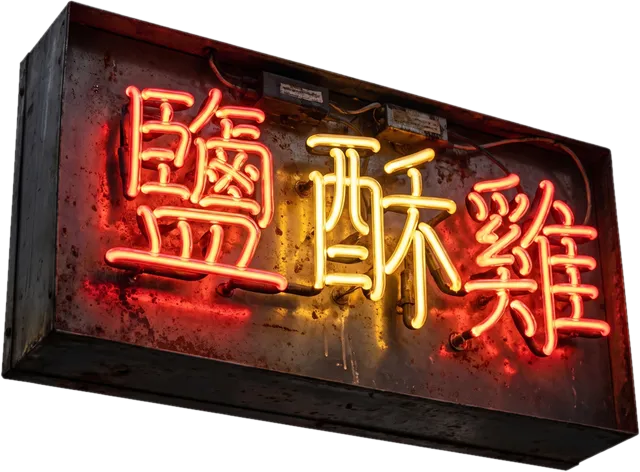
- How to order at a Taiwan night marketWhat to say at a Taiwan night market stall, from 雞排 and 鹽酥雞 to 臭豆腐 and bubble tea: pointing, asking the price, spice levels, to go or to eat here, with Lin's voice.
- Numbers in Mandarin: counting, prices and money in TaiwanChinese numbers the Taiwan way: count from 一 to 萬, pick 兩 or 二, use measure words like 個 and 杯, and say prices with 元, 塊 and 多少錢.
- How to say hello in Mandarin, beyond ni hao你好 always works, but Taiwan also says 哈囉, 嗨 and 早安. The everyday ways to say hello in Mandarin Chinese, and what to say back, with audio.