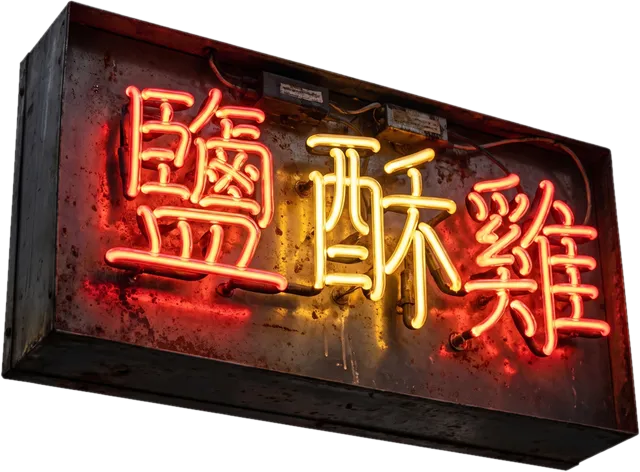


In Taiwan, Mandarin is the language everyone shares, and Taiwanese Hokkien, called 台語, is the second one you'll hear most. They are separate languages, not two accents of one: a Mandarin speaker can't follow Hokkien without learning it. Both are written with Chinese characters, which is why they get mixed up online, but they sound very different. Here's how to tell them apart by ear, where you'll hear each one, a few Hokkien words visitors notice, and why Mandarin is still the one to learn first.
This post compares the two. For the full list of Taiwan's languages, including Hakka and the indigenous languages, see our guide to what language is spoken in Taiwan.
Two languages, one set of characters
- 國語guóyǔ · ㄍㄨㄛˊ ㄩˇMandarin (the everyday name in Taiwan)
- 華語huáyǔ · ㄏㄨㄚˊ ㄩˇMandarin (the name in language teaching)
- 台語táiyǔ · ㄊㄞˊ ㄩˇTaiwanese Hokkien
Mandarin goes by several names in Taiwan; 國語, "the national language", is what most people call it, and 華語 is the term in language classes. Hokkien came with settlers from southern Fujian, across the strait. In Hokkien its own name is Tâi-gí, and the census calls it 閩南語, Southern Min.
The two share many characters but read them differently. 多謝, "thank you", is duōxiè in Mandarin and to-siā in Hokkien. Hokkien even has its own romanization, Tâi-lô, used by the Ministry of Education's Taiwanese dictionary. Our Taiwan Mandarin vs mainland Mandarin post is about a different question: two versions of the same language.
How to hear the difference
You don't need to understand either language to tell them apart. Listen for three things.
More tones, always shifting. Mandarin has four tones plus a light one (our tones guide explains them). Taiwanese Hokkien has seven, and in a phrase most syllables change tone when another follows, according to the Ministry of Education's notes on Tâi-lô. So the same word can sound different from one phrase to the next, and a Hokkien sentence rarely sits still.
Clipped endings. A Mandarin syllable ends in a vowel, an n or an ng. Hokkien syllables can also end in m, or stop short on a p, t, k, or a catch in the throat that Tâi-lô writes h (MOE romanization handbook). If you hear words snapped off, like tsia̍h ("eat") or tsiok ("very"), it's Hokkien.
Nasal vowels. Hokkien has vowels said through the nose, written with nn, as in pháinn-sè ("sorry"). Mandarin doesn't.
Here's the same idea in both:
| Meaning | Mandarin | Taiwanese Hokkien |
|---|---|---|
| I | 我 wǒ | 我 guá |
| Thank you | 謝謝 xièxie | 多謝 to-siā |
| Sorry, excuse me | 不好意思 bù hǎoyìsi | 歹勢 pháinn-sè |
| Tasty | 好吃 hǎochī | 好食 hó-tsia̍h |
| Very | 很 hěn | 足 tsiok |
| I don't know | 不知道 bù zhīdào | 毋知 m̄ tsai |
Where you'll hear each
Mandarin is everywhere: school, news, signs, shops, every counter. In the 2020 census, 96.8% of people aged six and over said they use Mandarin as their main or second language. Hokkien was close behind at 86.0%, though only 31.7% named it their main language (census summary).
Age makes the biggest difference. Mandarin is the main language of 92.1% of children aged 6 to 14, but only 28.5% of people 65 and over; for them, Hokkien is the main language for 65.9%. So you'll hear Hokkien most from older people: at traditional markets, at temples, from a friend's grandparents, and more in the south, in cities like Tainan and Kaohsiung.
You'll hear it on the Taipei MRT too. Station announcements come in at least four languages, Mandarin, Hokkien, Hakka and English, under Taiwan's law on equal languages in public transport announcements (Taipei Metro). Ride a few stops and you'll hear the difference for yourself.
And Hokkien seeps into Mandarin. Night-market favorites like 蚵仔煎, the oyster omelette, usually go by their Hokkien names (see how to order at a night market), and you may hear a quick 歹勢 in the middle of a Mandarin sentence.
Hokkien words visitors notice
These are Taiwanese Hokkien, not Mandarin. Readings are from the Ministry of Education's Taiwanese dictionary.
| Hokkien | Tâi-lô | Meaning | Mandarin equivalent |
|---|---|---|---|
| 多謝 | to-siā | Thank you | 謝謝 |
| 歹勢 | pháinn-sè | Sorry, excuse me | 不好意思 |
| 你食飽未? | Lí tsia̍h-pá--buē? | Have you eaten? | 吃飽了嗎? |
| 好食 | hó-tsia̍h | Tasty | 好吃 |
| 足好食 | tsiok hó-tsia̍h | Really tasty | 很好吃 |
| 頭家 | thâu-ke | Boss, shop owner | 老闆 |
| 毋知 | m̄ tsai | I don't know | 不知道 |
| 古錐 | kóo-tsui | Cute | 可愛 |
Lin, Bopomo's tutor, speaks Mandarin, so these have no audio here. Each dictionary page has a recording of the word or its example sentence.
The Mandarin you'll actually use
Whoever you're talking to, these work:
- 不好意思bù hǎoyìsi · ㄅㄨˋ ㄏㄠˇ ㄧˋ ˙ㄙExcuse me, sorry to bother you
- 我聽不懂台語wǒ tīng bù dǒng táiyǔ · ㄨㄛˇ ㄊㄧㄥ ㄅㄨˋ ㄉㄨㄥˇ ㄊㄞˊ ㄩˇI don't understand Taiwanese
If an older stallholder starts in Hokkien, 我聽不懂台語 is a polite way to ask for Mandarin, and almost everyone will switch. For the rest of a first trip, start with survival Mandarin for Taiwan.
Bopomo is an iPhone app for speaking Mandarin with Lin, your AI tutor, on a trip around Taiwan. The first 500 on the waitlist get the founding price. Join the waitlist.
Why learn Mandarin first
The census numbers make the case. Nearly everyone in Taiwan uses Mandarin, and nearly every Hokkien speaker uses Mandarin too. It's the language of school, signs and every counter, and it's the one you'll hear first from anyone under about forty-five. And it works outside Taiwan too.
None of that makes Hokkien less important. Since 2019, the National Languages Development Act has treated Taiwan's natural languages, Hokkien, Hakka, the indigenous languages and Taiwan Sign Language among them, as national languages, equal in status (law text). Plenty of learners pick up Hokkien as a second step, often from family or friends. A 多謝 at a market stall is a nice touch from day one.
Practice the Mandarin out loud
Start with the phrase block above. Tap a line to hear Lin, say it back, and listen for the Mandarin tones; then, next time you're in Taiwan, listen for the clipped endings and shifting tones that tell you someone has switched to Hokkien.
In Bopomo you speak Mandarin with Lin, your AI tutor, on a trip around Taiwan. She speaks with a Taiwan accent and replies to what you actually said. Bopomo teaches Mandarin, not Hokkien, and it doesn't score each tone yet.
Questions
Is Taiwanese the same as Mandarin?
No. Taiwanese usually means Taiwanese Hokkien (台語), a separate language from Mandarin. Both use Chinese characters, but a Mandarin speaker can't understand Hokkien without learning it.
Do people in Taiwan speak Taiwanese or Mandarin?
Both, and many people use both. In the 2020 census, 96.8% of people used Mandarin as a main or second language and 86.0% used Hokkien. Younger people mostly speak Mandarin; Hokkien is the main language of most people over 65.
Should I learn Taiwanese or Mandarin for Taiwan?
Mandarin first. Almost everyone speaks it, it's on every sign and at every counter, and it works outside Taiwan too. Add Hokkien later if you want to talk with older relatives or go deeper into local culture.
How do you say thank you in Taiwanese?
多謝, said to-siā in Taiwanese Hokkien. The Mandarin thank you is 謝謝 (xièxie).
Keep reading
- Numbers in Mandarin: counting, prices and money in TaiwanChinese numbers the Taiwan way: count from 一 to 萬, pick 兩 or 二, use measure words like 個 and 杯, and say prices with 元, 塊 and 多少錢.
- How long does it take to learn Mandarin?The US FSI plans 2,200 class hours for professional Mandarin. What that means, how long conversational Chinese takes, and Taiwan's TOCFL hour estimates.
- How to order at a Taiwan night marketWhat to say at a Taiwan night market stall, from 雞排 and 鹽酥雞 to 臭豆腐 and bubble tea: pointing, asking the price, spice levels, to go or to eat here, with Lin's voice.